


UK dairy farmers meet new industry targets for antimicrobial use.
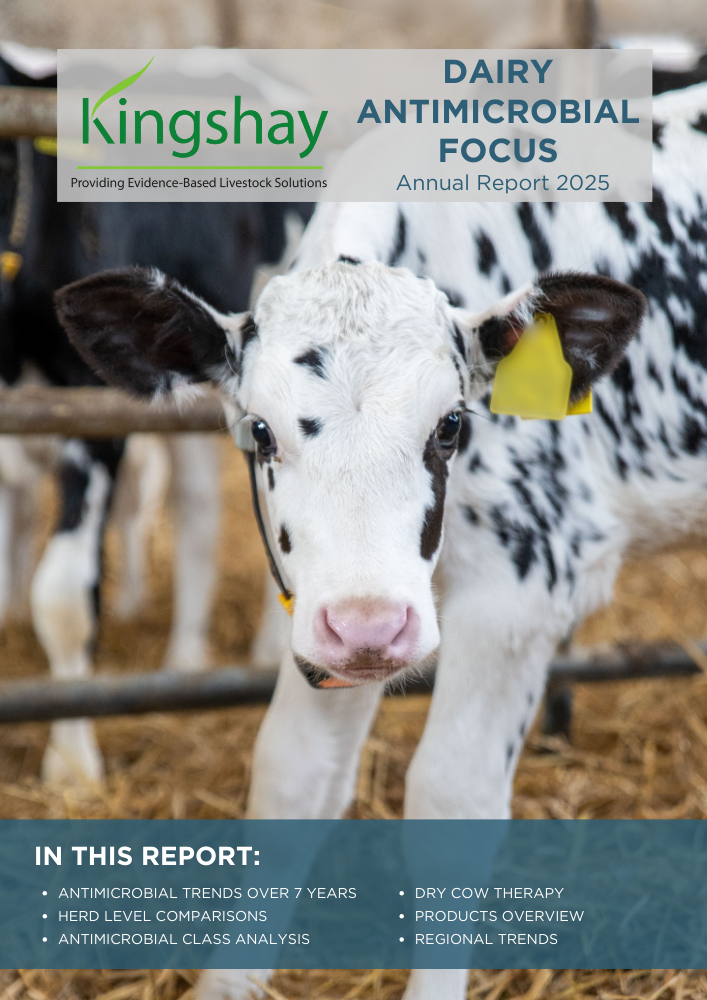
The continued decline in the use of antimicrobials on UK dairy farms means producers are meeting new industry targets just months after they were set, according to the latest Dairy Antimicrobial Focus Report from Kingshay, part of the VetPartners group.
The report is based on data from 967 dairy herds from 136 vet practices across the UK using the Kingshay Antimicrobial Monitoring Service, between 2024 and early 2025.
It shows that average total antimicrobial usage for the year has fallen to 12.2 mg/kg PCU from 12.7 mg/kg PCU in 2024 and 15.7 mg/kg PCU in 2020.
Kingshay farm services specialist and report co-author, Emma Puddy, says farmers should be proud of the figures which meet new targets set out by RUMA (Responsible use of Medicines in Agriculture Alliance) in November.
"The industry's efforts to reduce antimicrobial use are paying off. It's encouraging to see the latest RUMA targets are already being met," she says.
The new RUMA targets cover 2025-2029 and include annual reductions of three-year rolling averages in lactating and dry cow tube usage, plus a new 10% reduction on the previous year for calf oral antibiotics.
All targets have been achieved for this dataset. Lactating cow tube usage has fallen by 41% since 2019 to 0.352 DCDVet, while dry cow tubes are down on the three-year rolling average, despite a small increase this year.
"The calf oral antibiotics target was also met, with usage down 24% between 2024 and 2025 to 1.05 mg/kg PCU," says Ms Puddy. "We've also seen a 28% reduction in injectable highest priority critically important antimicrobials to 0.005 mg/kg PCU, which is a 98.3% reduction in seven years."
While the industry-wide progress is encouraging, Ms Puddy says the data shows opportunities for further improvement, with usage varying between regions and individual herds.
The south and south east of England recorded the lowest average usage at 10.4 mg/kg PCU, while the north of England had the highest at 14.9 mg/kg PCU.
The difference is even more pronounced between individual herds. The top-performing 25% averaged just 4.1mg/kg PCU, compared to 24.3 mg/kg PCU for the highest-using quartile.
"That top quartile really pulls the overall average up – the median across all herds was only 9.8mg/kg PCU," says Ms Puddy.
She adds that just over half of herds moved between quartiles year-on-year, showing how quickly usage can change.
"A disease outbreak can affect figures rapidly, which is why it is important to keep attention to detail high when it comes to adhering to health protocols, even when usage seems low."
Kingshay training consultant and vet, Michael Head, agrees and says a good starting point for reducing antimicrobial use is monitoring instances of disease through an effective herd health plan.
He adds: “Effective vaccination strategies form part of this because people can tend to reach for antibiotics, but the benefits of strong immunity, genetic advances and good nutrition mean cattle are able to resist disease better, and in turn, reduce the need for antimicrobials.
“Benchmarking is also an important tool because farmers can look at how their herd compares to their neighbours’ herds and identify areas for improvement.”
The 2025 annual Dairy Antimicrobial Focus Report can be accessed via the Kingshay website www.kingshay.com