

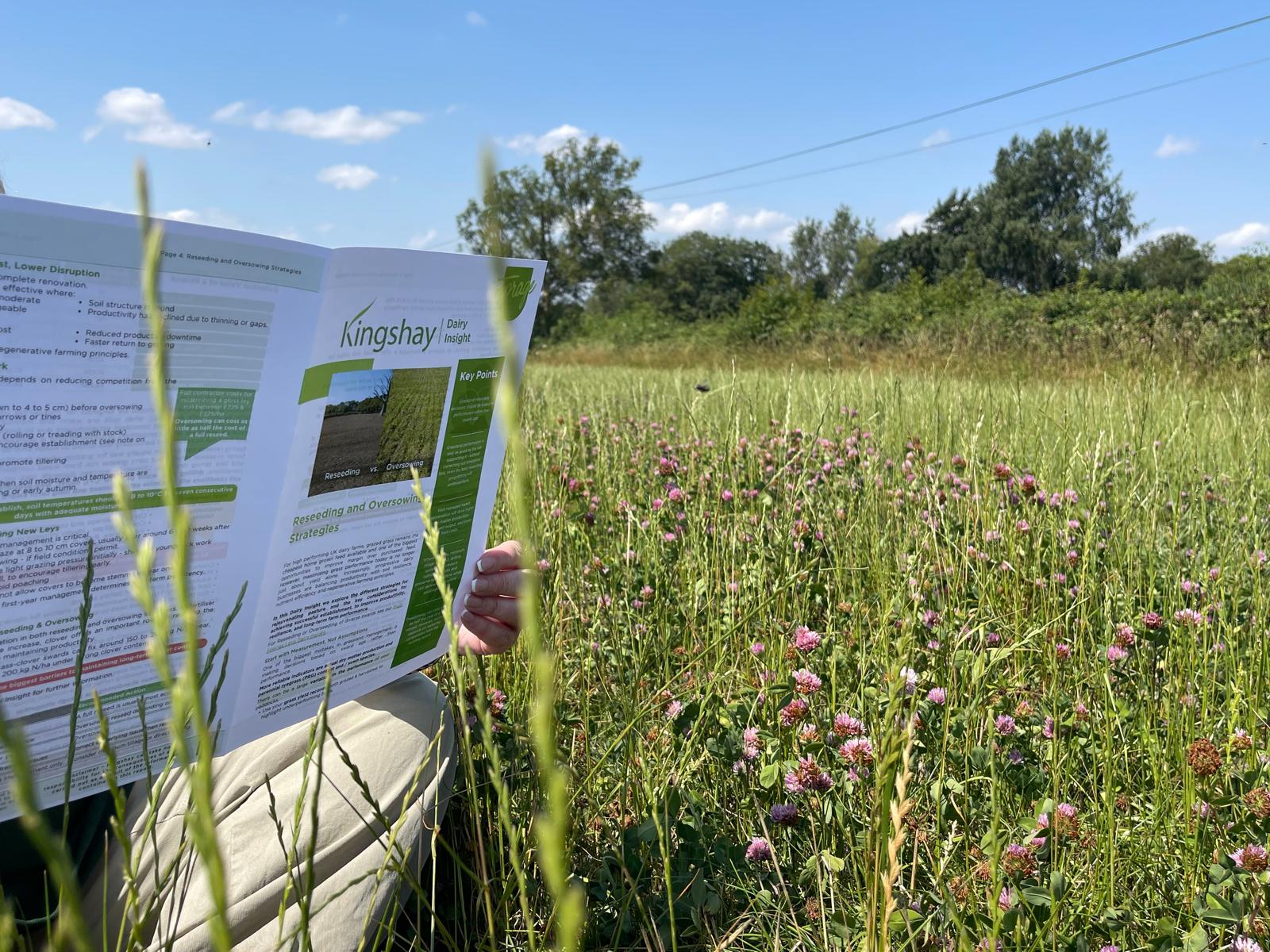
Publications
Our publications provide up-to-date knowledge and practical solutions to everyday challenges to meet the needs of the modern dairy farmer.
Kingshay Dairy Insight Publications
Stay one step ahead with Kingshay’s trusted Insight publications. Practical, expert-led briefings designed for modern dairy farming businesses. Produced since 1991, our concise, easy-to-digest updates deliver the knowledge you need to improve performance, strengthen your business, and support your whole farm team.
Our Insight publications cover all key areas of dairy farming, bringing together technical, research and business information, into clear, actionable advice you can use on farm. Alongside this, our monthly checklist provides timely reminders of essential tasks and highlights important policy changes, helping you stay organised and in control throughout the year.
Written and regularly updated by our specialists, each publication delivers clear, relevant advice in a simple format – ideal for farmers, family members, staff, vets and consultants alike.
A selection of our publications are available to purchase individually here online. To unlock the full library of publications and stay consistently informed, join our community, become a Kingshay member today.

Sign in to download the publications included with your membership, or to purchase a copy.
-

Dairy Insight
Controlling Cryptosporidium Dairy Insight
Take a closer look at cryptosporidiosis, the leading cause of diarrhoea in newborn and pre-weaned calves. We explore the disease, its symptoms and the key risk factors on farm, highlighting practical areas where management changes may help reduce the number of cases.
-
Dairy Insight
Epigenetics in Dairy Cows
This issue explores how factors such as nutrition, health, stress and housing can influence gene expression throughout a cow's life. It explains why early?life management has long?lasting effects on resilience, fertility and milk production, and how practical changes on farm can unlock more of each animal's genetic potential.
-
Dairy Insight
Feeding for Fertility Dairy Insight
This publication explores the link between proper feeding practices and improved fertility in cows, highlighting individual nutritional needs of heifers, fresh cows, and dry cows. Learn how tailored feeding strategies can optimise your herd's reproductive performance.
-
Dairy Insight
Fertility Key Performance Indicators
Healthy, fertile cows are the cornerstone to any efficient, productive dairy business. As such, fertility key performance indicators (KPIs) are an essential tool to track herd performance, identify areas for improvement and inform actions. This Dairy Insight explores the costs of infertility and offers some suggested KPIs for both all year round and block calving herds.
-
Dairy Insight
Genomics Dairy Insight
Over the last decade the UK dairy industry has seen a phase shift, with a growing contingent of commercial farmers recognising the role of genomics in driving rapid genetic progress as part of everyday breeding programmes. Over 100,000 new females will be genotyped this year alone, with around 70% of Holstein semen used also by genomic young sires. AHDB Dairy highlights a widening gulf between those who buy-in to genomics and those that don't – equating to over £19,000 in lost value for the average herd. Check out this technology to see if it fits your needs.
-
Dairy Insight
Metabolic Profiling Dairy Insight
This insight explores how blood profiling can help you identify problems with the cows and the ration they are being fed – if interpreted correctly. Interpreting the results from blood profiling is complex and requires professional input. This note provides an overview of what's involved, allowing you to have a more informed discussion with your vet or nutritionist.
-
Dairy Insight
Q Fever
Q (Query) fever, caused by the bacteria Coxiella burnetti, is an important disease of cattle, sheep and goats. As well as causing potentially significant losses in dairy herds, it is a zoonotic disease, which means it can cause illness in humans. However, despite this, awareness of the disease across the farming industry is considered to be very low. This dairy insight aims to improve your knowledge and understanding of the disease and how you can manage it on your farm.
-
Dairy Insight
Oestrus Syncronisation
Oestrus synchronisation is when combinations of hormones are used to bring a cow to a predictable point in their oestrus cycle which enables fixed time insemination. Synchronisation can be used to reduce the open days where heats are missed either through poor heat detection or through poor displays of heat. This DAIRY insight looks at the costs of infertility and how synchronisation may be a solution.
-
Dairy Insight
Neospora
There is no treatment or vaccination for Neospora, good biosecurity policies which aim to reduce the risk of introducing Neospora to the herd is essential, as is routine screening to identify infected animals and having a plan as how to manage them. This DAIRY insight will explore how Neospora can infect your herd, how to identify it and how it may affect individual livestock.
-
Dairy Insight
Fine Tuning Heifer Rearing
Heifer calves are the future of most dairy herds, and you don't get a second chance at getting it right. Therefore, time taken for attention to detail pays dividends, not only for the calf but for the lifetime of the animal – time and money that could be recouped many times over. This RESEARCH insight explores two recent studies, and asks if their findings can positively impact your heifer rearing management.
-
Dairy Insight
Automatic Heat Detection Research Insight
Poor fertility is one of the largest economic problems on dairy farms. Data from Kingshay Dairy Manager puts the losses as a result of poor fertility at £197 per cow, or the equivalent of 2.31p/litre which for an average 150-cow herd equates to £20,250/year. This RESEARCH insight looks at the latest developments in automatic heat aids and what can impact accurate heat detection.
-
Dairy Insight
Net Zero Emissions Methane
This is the third in the series of dairy insight publications covering 'Net Zero Emissions' where we will attempt to identify the sources of each GHG, how it may be reduced and aim to outline current and future actions that may help the UK dairy industry become net zero emissions by 2040. Dairy cows produce approximately 21 grams of Methane (CH4) per kilogram of dry matter consumed: 500 g/day for cow consuming 24 Kg/DM/day, or 4,828 kgCO2e/yr. Reducing methane levels in the atmosphere is seen by many as a powerful lever to buy time until a decarbonised economy is created. This dairy insight explores practical ways to mitigate methane production on dairy farms.




Find out how Kingshay can help you and your farming business.
Kingshay have been supporting farmers and providing clarity to farming businesses and the wider industry since 1991.