

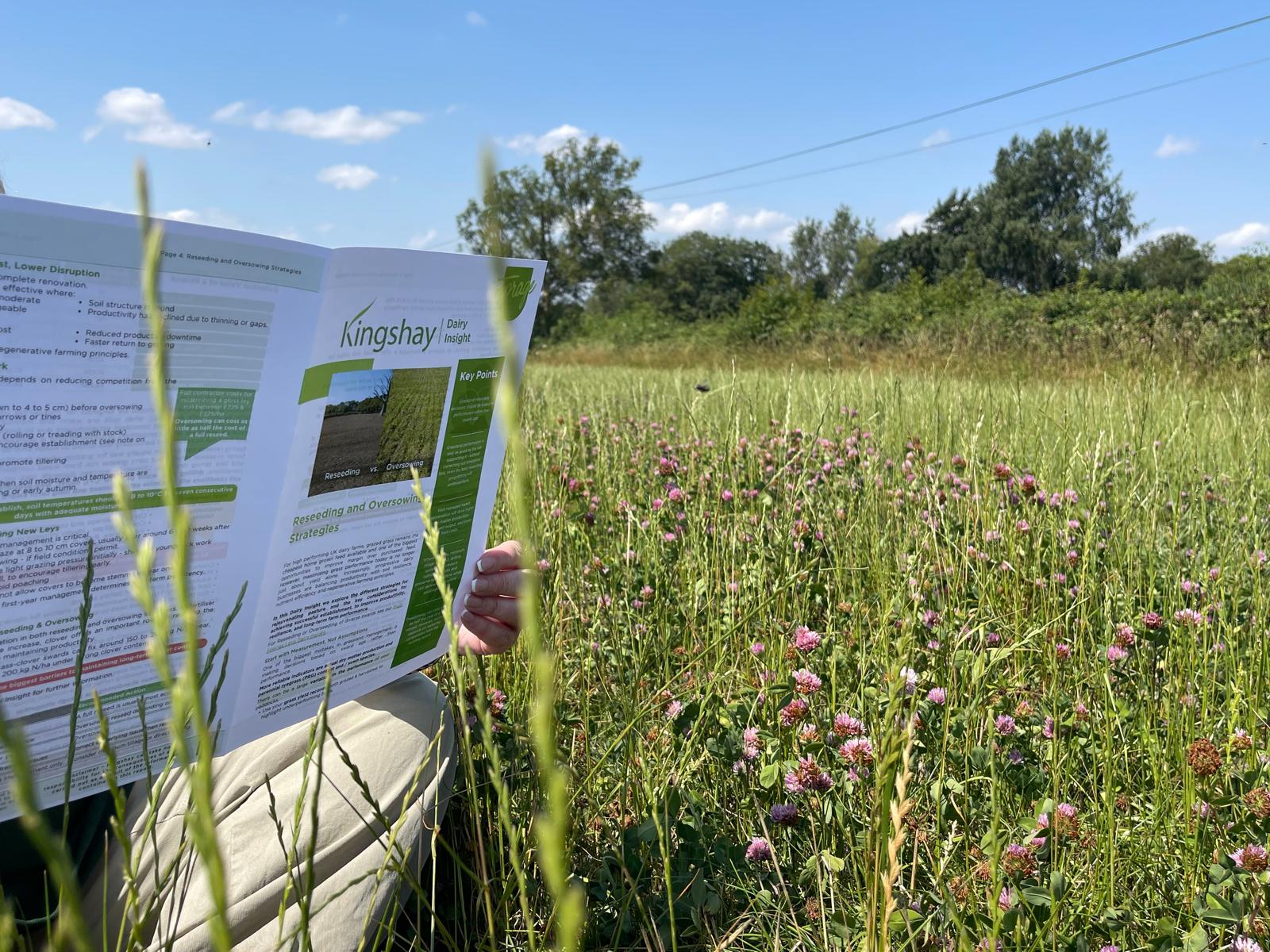
Publications
Our publications provide up-to-date knowledge and practical solutions to everyday challenges to meet the needs of the modern dairy farmer.
Kingshay Dairy Insight Publications
Stay one step ahead with Kingshay’s trusted Insight publications. Practical, expert-led briefings designed for modern dairy farming businesses. Produced since 1991, our concise, easy-to-digest updates deliver the knowledge you need to improve performance, strengthen your business, and support your whole farm team.
Our Insight publications cover all key areas of dairy farming, bringing together technical, research and business information, into clear, actionable advice you can use on farm. Alongside this, our monthly checklist provides timely reminders of essential tasks and highlights important policy changes, helping you stay organised and in control throughout the year.
Written and regularly updated by our specialists, each publication delivers clear, relevant advice in a simple format – ideal for farmers, family members, staff, vets and consultants alike.
A selection of our publications are available to purchase individually here online. To unlock the full library of publications and stay consistently informed, join our community, become a Kingshay member today.

Sign in to download the publications included with your membership, or to purchase a copy.
-

Dairy Insight
Johne’s Disease
(Pronounced "yo-knees" or in some regions of the UK – John's) Johne's disease or JD is a chronic enteritis of cattle (and sheep) caused by Mycobacterium avium subspecies paratuberculosis or MAP. The bacteria infect the lining of the intestines and reduce its capacity to absorb fluid and nutrients. The main clinical signs of JD are progressive weight loss and chronic green bubbly diarrhoea. Due to regular screening and culling of MAP infected cattle, clinical Johne's disease is rarely seen on farm. This Insight publication looks at the spread of Johne's on farm and what measures can be introduced to reduce or eliminate the risks.
-
Dairy Insight
Sustainable Parasite Control – Part 1: Worms and Fluke
Parasites, both ectoparasites (external parasites) and endoparasites (internal parasites) can be a major cause of disease in dairy cattle. They will not only contribute to poor animal health and welfare, but ultimately they will impact productivity; through reduced appetite and feed intake. Gut worms in particular will impact nutrient utilisation leading to poor feed efficiency, affecting liveweight gains, and milk production in lactating stock. Historically, control of parasites has largely been through the use of chemicals, such as anthelmintics, flukicides, and ectoparasiticides. This DAIRY insight is the first in a two part series exploring the control of parasites without using chemicals for a more sustainable farming business
-
Dairy Insight
Assisted Calving
For a heifer or cow to reach their full production potential, a good calving is essential. They are less likely to suffer from problems post calving such as metritis, ketosis and displaced abomasum, as well as returning to heat and getting back in calf more quickly. For staff, a good calving is a positive experience and impacts less on precious time, as there are fewer consequences such as weak calves and sick cows to deal with. This DAIRY insight explores difficult calvings and when and how to assist.
-
Dairy Insight
Yeasts
Yeasts have the potential to help rumen health, aid forage digestion and boost yields. However, before reaching for the bag, it's essential diets are balanced and delivered correctly and return on investment is carefully assessed. This DAIRY insight explores the uses of yeasts, when to use them and the key things to consider before feeding them.
-
Dairy Insight
Milk Fever
Milk fever (or hypocalcaemia) is a potentially fatal metabolic disorder where dairy cows experience calcium (Ca) deficiency. With the estimated economic cost per case between £200 to £250, this DAIRY insight looks at symptoms, investigates risk factors and highlights key areas to consider when managing milk fever.
-
Dairy Insight
Post Calving Management
Careful monitoring of the performance and health of freshly calved cows will help to achieve expected lactation yields. Particular attention should be paid to cows who are "at risk" of having problems post calving. Monitoring their health and providing early treatment where necessary will improve whole herd performance. This insight covers: Knock-on effects post calving […]
-
Dairy Insight
Monitoring Mastitis Management
Every clinical case of mastitis costs around £290. Currently the top 25% of farmers achieve 22 mastitis cases per 100 cows, while the group average is 41 cases per 100 cows (Kingshay Dairy Costings Focus 2017). These 19 fewer cases achieved savings of £5,510 through reduced treatment costs and increased milk sales. Keeping good mastitis […]
-
Dairy Insight
Body Condition Scoring
Body Condition Scoring (BCS) is a simple and effective farm management tool. It is a measure of body fat/energy reserves, that can be used to aid decisions or troubleshoot issues as they arise. The fine tuning of nutrition throughout the lactation and dry period improves the overall nutritional status of the herd, leading to improved […]
-
Dairy Insight
Ketosis
Ketosis is one of the most significant 'hidden' diseases affecting the UK dairy herd. Around 30% of cows are estimated to develop the metabolic disease during the transition period at a cost of about £200 a case. This Farming Note focuses on causes, diagnosis, testing and treatment. Issued August 2017 About Kingshay Farming Notes […]
Find out how Kingshay can help you and your farming business.
Kingshay have been supporting farmers and providing clarity to farming businesses and the wider industry since 1991.