
Publications
Our publications provide up-to-date knowledge and practical solutions to everyday challenges to meet the needs of the modern dairy farmer.
Kingshay Dairy Insight Publications
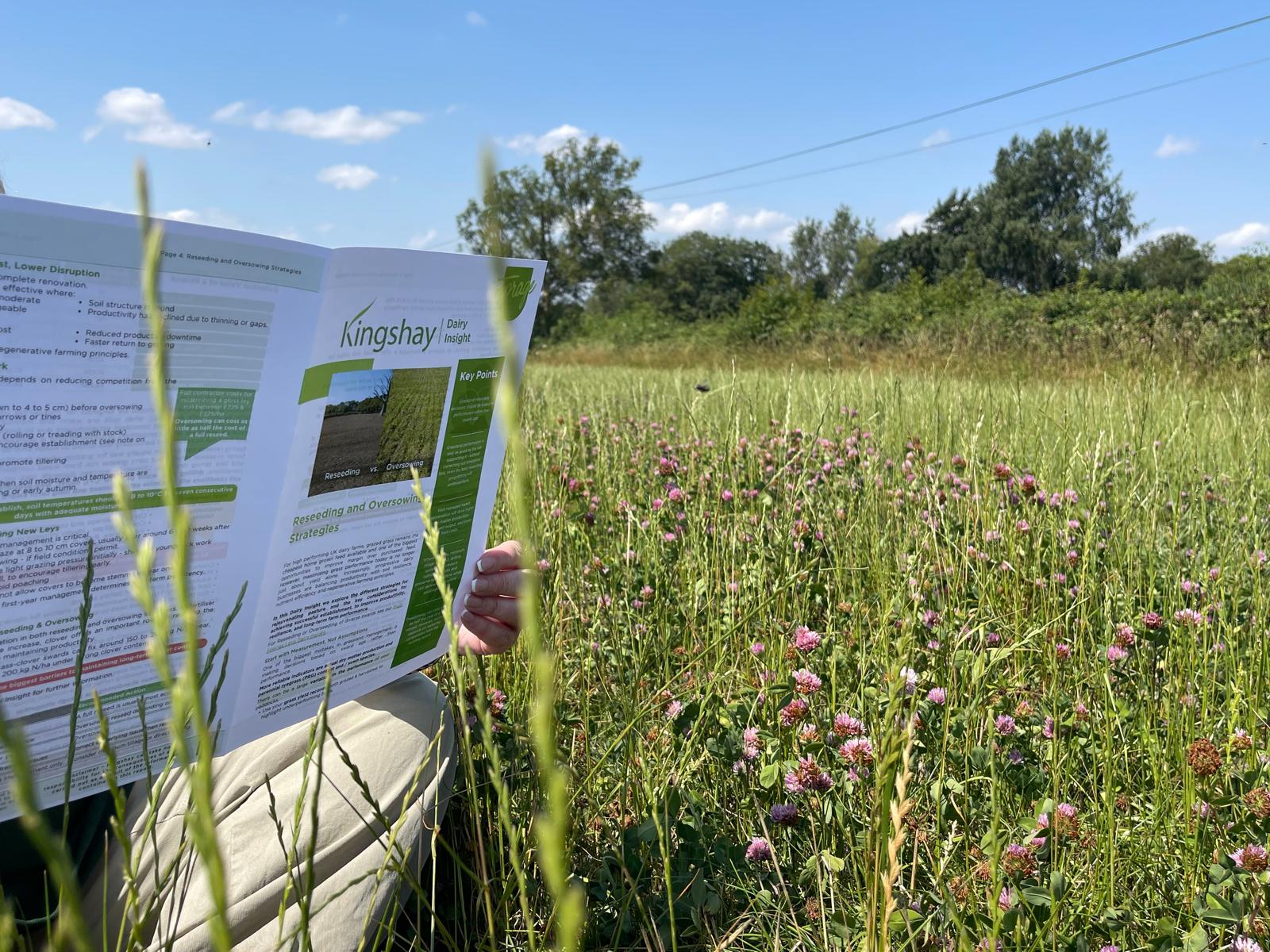
Stay one step ahead with Kingshay’s trusted Insight publications. Practical, expert-led briefings designed for modern dairy farming businesses. Produced since 1991, our concise, easy-to-digest updates deliver the knowledge you need to improve performance, strengthen your business, and support your whole farm team.
Our Insight publications cover all key areas of dairy farming, bringing together technical, research and business information, into clear, actionable advice you can use on farm. Alongside this, our monthly checklist provides timely reminders of essential tasks and highlights important policy changes, helping you stay organised and in control throughout the year.
Written and regularly updated by our specialists, each publication delivers clear, relevant advice in a simple format – ideal for farmers, family members, staff, vets and consultants alike.
A selection of our publications are available to purchase individually here online. To unlock the full library of publications and stay consistently informed, join our community, become a Kingshay member today.

Sign in to download the publications included with your membership, or to purchase a copy.
-

Dairy Insight
Bimodal Milking
Farmers aim for a quick efficient milking. But can milking be done too quickly? This DAIRY insight explores the concept of bimodal milking and what practical actions you and your staff can take on farm to reduce it, whilst speeding up the milking process. This insight includes a case study into changing milking routine to reduce bimodal milking.
-
Dairy Insight
The Role of Fat Supplements for Dairy Cows
Dietary fats have been subject to intense dairy cattle research over the last 30 years, leading to increasing evidence that demonstrates that fatty acids can have both positive and negative effects on production and animal welfare. This DAIRY insight on 'The Role of Fat Supplements for Dairy Cattle' explores these issues. For example, some positives show that fatty acids can improve yields, BCS and fertility. But farmers need to aware that adding a 39MJ/ME/Kg DM fat supplement might look good on the computer screen, but often disappoints. One reason is that not all that energy is available to the cow as saturated fat are less digestible than unsaturated fat. This insight also discusses the make up of fats, the digestion of fats and the relationship between fat and milk production. Issued August 2020
-
Dairy Insight
Protein Efficiency in Dairy Cows
As environmental awareness is coming more prominent and rules and regulations are being created for farmers to reduce their environmental impact, lowering concentration of protein fed to cattle is worth considering to decrease environmental impact, but also increase protein efficiency in dairy cows. 75% of all nitrogen consumed by cattle is excreted as urine or faeces and responsible for environmental damage from production of ammonia gases and nitrous oxide. Soya also creates another issue, soya being a key protein source for dairy cattle but being linked to deforestation of rain forest, suggest another reason to reduce protein concentration. This DAIRY insight publication explores how low can you go in protein concentration, discusses the new NRC recommendations set to come out later this year, as well as looking into how microbial proteins provide the most balanced form of amino acids for a dairy cow.
-
Dairy Insight
Thermoduric Bacteria
A growing number of milk processors are testing milk for thermoduric bacteria and penalising for counts above >500 cfu/ml. With high counts associated with milk quality and shelf-life issues, it is likely that thermodurics could join somatic cell counts (SCC) and bactoscans on the list of routinely monitored parameters in the not too distant future. Understanding your farm's levels and adopting good cow and milking plant cleanliness is a must to keep counts under control. This DAIRY insight looks at where thermoduric bacteria are found and how to prevent them getting into your milk.
-
Dairy Insight
Net Zero Emissions Methane
This is the third in the series of dairy insight publications covering 'Net Zero Emissions' where we will attempt to identify the sources of each GHG, how it may be reduced and aim to outline current and future actions that may help the UK dairy industry become net zero emissions by 2040. Dairy cows produce approximately 21 grams of Methane (CH4) per kilogram of dry matter consumed: 500 g/day for cow consuming 24 Kg/DM/day, or 4,828 kgCO2e/yr. Reducing methane levels in the atmosphere is seen by many as a powerful lever to buy time until a decarbonised economy is created. This dairy insight explores practical ways to mitigate methane production on dairy farms.
-
Dairy Insight
Precision Cut vs Forage Wagon
Many factors determine the quality of the silage that is ultimately fed to dairy cows. The Forage Cost Report bases yield and cost values on an average of well grown crops in a typical growing year and medium soils. But this is only part of the story. The quality of the grass, the speed and consolidation of the grass in the clamp, the chop length, clamp design, sealing, fermentation characteristics and the feed out all impact on the amount and value of the original crop that is ultimately converted to milk or meat (silo losses). In this DAIRY insight we compare the strengths and weaknesses of Forage Wagons versus Precision Chop systems in their silage making qualities.
-
Dairy Insight
Successful Transition to the Winter Diet
Making sure cows are moved onto the correct winter ration will not only ensure milk production and cow health is maintained, but that the farm's grazing covers are closed correctly to allow adequate grass the following spring. This insight publication will highlight the key considerations for transitioning cows onto a winter diet.
-
Dairy Insight
Compact Feeding
Compact feeding is a popular concept in Denmark and one that is growing in popularity in the UK. It was developed by Danish professor, Niels Bastian Kristensen. The principal of compact feeding is soaking and mixing concentrates, then adding forage and mixing again – creating a consistency similar to porridge. This DAIRY insight publication looks at the process of compact feeding and examines the advantages and possible pitfalls
-
Dairy Insight
Milk Urea
Milk urea levels are a useful means of assessing ration balance, with fluctuations typically highlighting a shift in the balance between rumen degradable protein and energy. Elevated milk ureas suggest protein is not being utilised effectively by the cow. This not only has dietary and environmental cost implications but could also negatively impact on fertility. This insight publication looks at how urea is produced, discusses target levels and how to manage urea levels.
-
Dairy Insight
Butterfat At Grass
Milk cheques are becoming increasingly influenced by milk butterfat levels, which makes avoiding the typical milk fat depression seen at turn-out vital. However, ensuring diets are balanced sufficiently to utilise grazing, whilst meeting milk contract requirements should be a priority. This dairy insight looks at the causes of the butterfat depression and investigates practical solutions, […]
-
Dairy Insight
Multi Cut Silage
Adopting a multi-cut silage system, which reduces the interval between silage cuts could be one way to help farmers maximise milk from forage – something nearly all respondents from a 2018 Kingshay survey identified as a priority. Cutting more frequently means grass is younger, leafier, higher quality and highly digestible. As a result, cows are […]
-
Dairy Insight
Making the Most of Your Nutritionist
Volatile feed markets and increasing pressure on margins mean that the role of the farm nutritionist in creating a well-balanced ration to meet specific farm requirements and boost efficiencies, has never been more important. Combining sound nutritional advice from a competent advisor, with top-notch, on-farm management will ultimately maximise herd performance and help farmers meet […]



Find out how Kingshay can help you and your farming business.
Kingshay have been supporting farmers and providing clarity to farming businesses and the wider industry since 1991.