
Publications
Our publications provide up-to-date knowledge and practical solutions to everyday challenges to meet the needs of the modern dairy farmer.
Kingshay Dairy Insight Publications
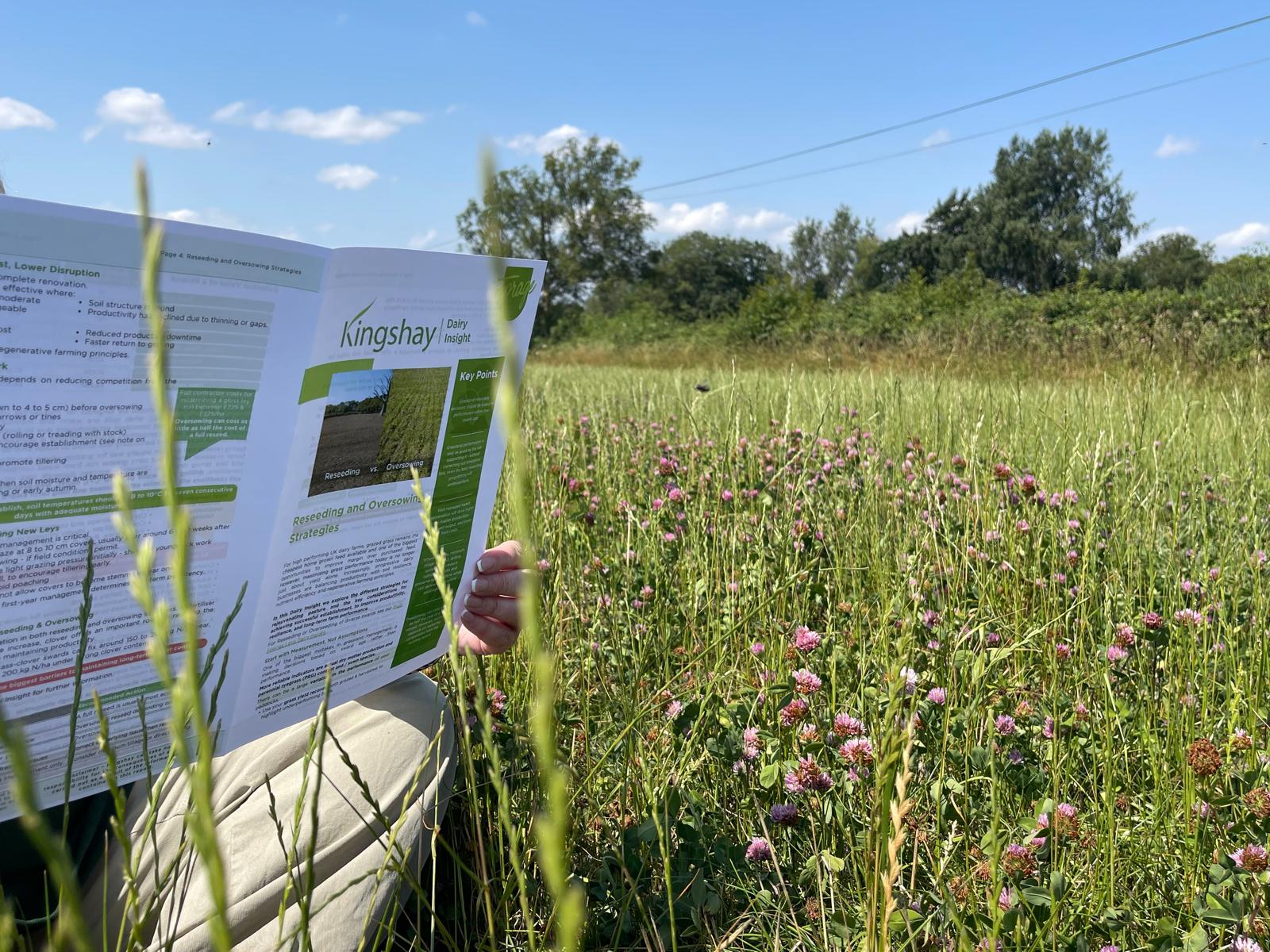
Stay one step ahead with Kingshay’s trusted Insight publications. Practical, expert-led briefings designed for modern dairy farming businesses. Produced since 1991, our concise, easy-to-digest updates deliver the knowledge you need to improve performance, strengthen your business, and support your whole farm team.
Our Insight publications cover all key areas of dairy farming, bringing together technical, research and business information, into clear, actionable advice you can use on farm. Alongside this, our monthly checklist provides timely reminders of essential tasks and highlights important policy changes, helping you stay organised and in control throughout the year.
Written and regularly updated by our specialists, each publication delivers clear, relevant advice in a simple format – ideal for farmers, family members, staff, vets and consultants alike.
A selection of our publications are available to purchase individually here online. To unlock the full library of publications and stay consistently informed, join our community, become a Kingshay member today.

Sign in to download the publications included with your membership, or to purchase a copy.
-

Dairy Insight
MicroRNA Biomarkers for Johne’s Disease
Johne's disease costs farmers up to 50% of their annual net profits and the estimated 10-year average annual losses totalling £25.5 million in the UK and 364.31 million euros across losses in the EU. Johne's disease is also the disease which causes the highest GHG emissions in cattle. This Research Insight explores how microRNA Biomarkers […]
-
Dairy Insight
Metabolic Profiling Dairy Insight
This insight explores how blood profiling can help you identify problems with the cows and the ration they are being fed – if interpreted correctly. Interpreting the results from blood profiling is complex and requires professional input. This note provides an overview of what's involved, allowing you to have a more informed discussion with your vet or nutritionist.
-
Dairy Insight
Parasite Control Part 2
Parasites, both ectoparasites (external parasites) and endoparasites (internal parasites) can be a major cause of disease in dairy cattle. They will not only contribute to poor animal health and welfare, but ultimately, they will impact productivity, through reduced appetite and feed intake. Historically, control of parasites has largely been through the use of chemicals, such as anthelmintics, flukicides, and ectoparasiticides. This dairy insight is the second of a two-part series exploring the control of parasites by using preventative methods and the correct control, where necessary. Detailing the most important and commonly found ectoparasites to UK cattle herds.
-
Dairy Insight
Milk Lactose
Of the three main milk solid components; fat, protein and lactose, lactose has the highest concentration in bovine milk. However, it has the lowest commercial value per unit of weight, and as a result of this, not much attention has been focused on the quality of milk lactose in the past. More recently, some milk buyers have added lactose to their regular testing suite. This DAIRY insight explores milk lactose levels, what is considered normal and what affects lactose levels in milk, to help you make informed management decisions on farm.
-
Dairy Insight
Q Fever
Q (Query) fever, caused by the bacteria Coxiella burnetti, is an important disease of cattle, sheep and goats. As well as causing potentially significant losses in dairy herds, it is a zoonotic disease, which means it can cause illness in humans. However, despite this, awareness of the disease across the farming industry is considered to be very low. This dairy insight aims to improve your knowledge and understanding of the disease and how you can manage it on your farm.
-
Dairy Insight
Trace Minerals
Knowing and understanding mineral nutrition for your dairy cows, is vital to overall cow performance. An adequate dietary mineral supply and balance is a prerequisite to ensuring optimal production, health, and fertility in your cattle. Without the appropriate balance of minerals, cows will not perform as well as they could or may develop health issues. This dairy insight explores the role of trace minerals for dairy cattle and highlights the value in analysing the mineral levels in your stock as well as your grass, forage, and water to determine if there is an over or under supply.
-
Dairy Insight
Vaccination Planning
Vaccines have been available from the 1930's, since then they have made a major contribution to improving cattle health and welfare. They are vital components in preventing, managing and eradicating diseases on farm and ultimately improving productivity and profitability. This DAIRY insight looks at improving animal health outcomes by getting the most from your vaccines on farm.
-
Dairy Insight
Oestrus Syncronisation
Oestrus synchronisation is when combinations of hormones are used to bring a cow to a predictable point in their oestrus cycle which enables fixed time insemination. Synchronisation can be used to reduce the open days where heats are missed either through poor heat detection or through poor displays of heat. This DAIRY insight looks at the costs of infertility and how synchronisation may be a solution.
-
Dairy Insight
Neospora
There is no treatment or vaccination for Neospora, good biosecurity policies which aim to reduce the risk of introducing Neospora to the herd is essential, as is routine screening to identify infected animals and having a plan as how to manage them. This DAIRY insight will explore how Neospora can infect your herd, how to identify it and how it may affect individual livestock.
-
Dairy Insight
Pneumonia (BRD) Prevention
Calf pneumonia is the more commonly used name for Bovine Respiratory Disease (BRD). It is estimated to cost the UK cattle industry around £80 million a year. A mild case may only cost c.£30 per animal, however this rises to £80 for more severe cases. Costs will increase to over £500 if the disease results in mortality. Some costs, such as vet and med costs, are highly visible at the time of an outbreak. Others, such as the impact on daily liveweight gain, feed conversion efficiency and labour, are much harder to quantify, but important nonetheless. Moreover, pneumonia can significantly affect lifetime productivity – data shows that heifers treated for pneumonia took on average an additional 30 days to reach age at first calving and those which had multiple pneumonia treatments as calves produced 337 fewer litres in their 1st lactation and 849 fewer in their 2nd.
-
Dairy Insight
Sustainable Parasite Control – Part 1: Worms and Fluke
Parasites, both ectoparasites (external parasites) and endoparasites (internal parasites) can be a major cause of disease in dairy cattle. They will not only contribute to poor animal health and welfare, but ultimately they will impact productivity; through reduced appetite and feed intake. Gut worms in particular will impact nutrient utilisation leading to poor feed efficiency, affecting liveweight gains, and milk production in lactating stock. Historically, control of parasites has largely been through the use of chemicals, such as anthelmintics, flukicides, and ectoparasiticides. This DAIRY insight is the first in a two part series exploring the control of parasites without using chemicals for a more sustainable farming business
-
Dairy Insight
Assisted Calving
For a heifer or cow to reach their full production potential, a good calving is essential. They are less likely to suffer from problems post calving such as metritis, ketosis and displaced abomasum, as well as returning to heat and getting back in calf more quickly. For staff, a good calving is a positive experience and impacts less on precious time, as there are fewer consequences such as weak calves and sick cows to deal with. This DAIRY insight explores difficult calvings and when and how to assist.

Find out how Kingshay can help you and your farming business.
Kingshay have been supporting farmers and providing clarity to farming businesses and the wider industry since 1991.