

Publications
Our publications provide up-to-date knowledge and practical solutions to everyday challenges to meet the needs of the modern dairy farmer.
Kingshay Dairy Insight Publications
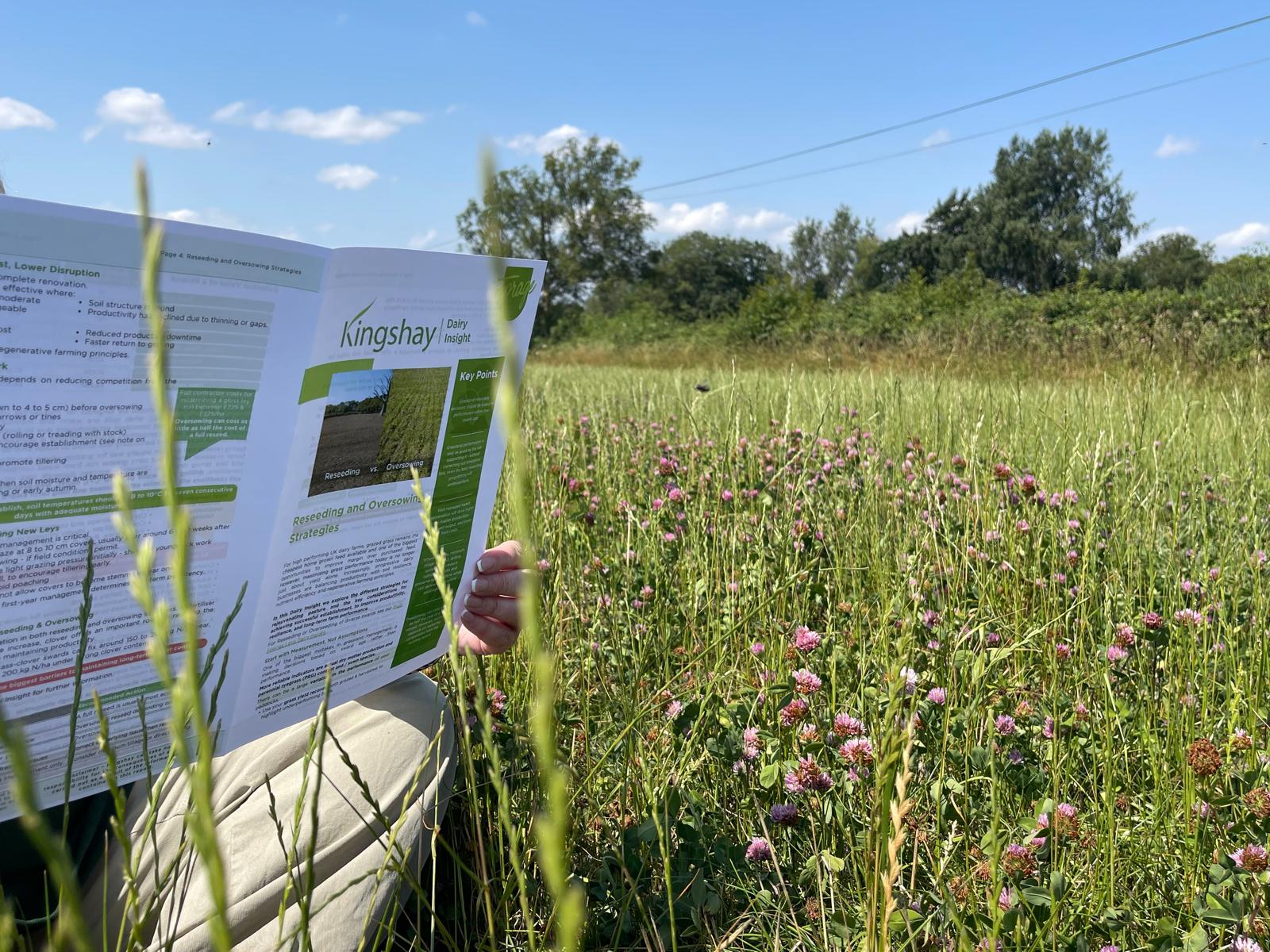
Stay one step ahead with Kingshay’s trusted Insight publications. Practical, expert-led briefings designed for modern dairy farming businesses. Produced since 1991, our concise, easy-to-digest updates deliver the knowledge you need to improve performance, strengthen your business, and support your whole farm team.
Our Insight publications cover all key areas of dairy farming, bringing together technical, research and business information, into clear, actionable advice you can use on farm. Alongside this, our monthly checklist provides timely reminders of essential tasks and highlights important policy changes, helping you stay organised and in control throughout the year.
Written and regularly updated by our specialists, each publication delivers clear, relevant advice in a simple format – ideal for farmers, family members, staff, vets and consultants alike.
A selection of our publications are available to purchase individually here online. To unlock the full library of publications and stay consistently informed, join our community, become a Kingshay member today.

Sign in to download the publications included with your membership, or to purchase a copy.
-

Dairy Insight
Milk Fever
Milk fever (or hypocalcaemia) is a potentially fatal metabolic disorder where dairy cows experience calcium (Ca) deficiency. With the estimated economic cost per case between £200 to £250, this DAIRY insight looks at symptoms, investigates risk factors and highlights key areas to consider when managing milk fever.
-
Dairy Insight
Bedding Conditioners
Bedding conditioners form an important part of a mastitis control strategy by drying the cubicle beds and making an inhospitable environment for bacteria. However, their use is no substitute for good bed management. Correct application is also a must to ensure optimum efficacy and to avoid both human health and safety issues and animal welfare challenges. With little independent research surrounding individual products, caution is also advised. This DAIRY insight explores the types of conditioners available, when to use and how to get the most out of conditioners.
-
Dairy Insight
Antibiotic Update
Antibiotics (AB) have played a major role in the health and welfare of cattle; they are vital for the treatment and control of bacterial infections. The increasing emergence of antimicrobial resistance in human medicine led the World Health Organisation (WHO) in 2014 to categorise antimicrobials used in human health as 'critically important', 'highly important' and 'important'. Whilst the use of antibiotics in farm animals has continued to fall (use has dropped by over 50% since 2014), they have persisted to come under heightened scrutiny. This DAIRY insight looks at the changes in AB usage since the introduction of the RUMA targets in 2017, summarises the new EMA categories and reviews the new RUMA targets for dairy.
-
Dairy Insight
Liver Fluke
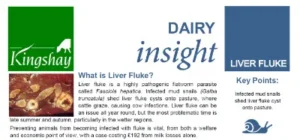
Liver fluke is a highly pathogenic flatworm parasite called Fasciola hepatica. Infected mud snails (Galba truncatula) shed liver fluke cysts onto pasture, where cattle graze, causing cow infections. Liver fluke can be an issue all year round, but the most problematic time is late summer and autumn, particularly in the wetter regions. Preventing animals from becoming infected with fluke is vital, from both a welfare and economic point of view, with a case costing £192 from milk losses alone. This DAIRY insight explores diagnoses, treatment, and prevention of liver fluke in dairy cows.
-
Dairy Insight
Bimodal Milking
Farmers aim for a quick efficient milking. But can milking be done too quickly? This DAIRY insight explores the concept of bimodal milking and what practical actions you and your staff can take on farm to reduce it, whilst speeding up the milking process. This insight includes a case study into changing milking routine to reduce bimodal milking.
-
Dairy Insight
Automatic Heat Detection Research Insight
Poor fertility is one of the largest economic problems on dairy farms. Data from Kingshay Dairy Manager puts the losses as a result of poor fertility at £197 per cow, or the equivalent of 2.31p/litre which for an average 150-cow herd equates to £20,250/year. This RESEARCH insight looks at the latest developments in automatic heat aids and what can impact accurate heat detection.
-
Dairy Insight
Colostrum Hygiene & Storage
Heifer calves are the future of your dairy herd, you don't get a second chance at getting it right. Therefore, time taken for attention to detail pays dividends not only for the calf but for the lifetime of the animal – time and money that could be recouped many times over. This dairy insight summarises best practice in colostrum hygiene and storage to get your calves off to the best possible start.
-
Dairy Insight
Lameness Behaviour in Dairy Cows
Lameness is a costly disease in dairy herds with each case estimated to cost £196 – for treatment costs, labour, loss of milk production, loss of fertility and culling. It is thought average lameness levels have increased slightly to around 40 cases for every 100 cows. However, in the top 25% of dairy herds lameness levels are down at 21 cases per 100 cows saving £3,724 for every 100 cows (Dairy Costings Focus Report 2019). This RESEARCH insight explores some of the latest lameness studies and looks at how the findings can influence on-farm performance.
-
Dairy Insight
Net Zero Emissions Methane
This is the third in the series of dairy insight publications covering 'Net Zero Emissions' where we will attempt to identify the sources of each GHG, how it may be reduced and aim to outline current and future actions that may help the UK dairy industry become net zero emissions by 2040. Dairy cows produce approximately 21 grams of Methane (CH4) per kilogram of dry matter consumed: 500 g/day for cow consuming 24 Kg/DM/day, or 4,828 kgCO2e/yr. Reducing methane levels in the atmosphere is seen by many as a powerful lever to buy time until a decarbonised economy is created. This dairy insight explores practical ways to mitigate methane production on dairy farms.
-
Dairy Insight
Disbudding Calves Research Insight November 2019
In recent years many papers have been published around the procedure of disbudding, the use of NSAIDs, as well as health and safety aspects – including the inhalation of noxious gases during the process. This DAIRY insight explores a selection of this research.
-
Dairy Insight
NSAIDs for Pain Management in Cattle
Prompt recognition and treatment of disease are essential to reduce pain in cattle and promote cow welfare. Non-Steroidal Anti-Inflammatory drugs (NSAIDs) are an important component in helping manage pain, inflammation and disease. This DAIRY insight publication will look at how NSAIDs can form part of a treatment regime in cattle.
-
Dairy Insight
Compact Feeding
Compact feeding is a popular concept in Denmark and one that is growing in popularity in the UK. It was developed by Danish professor, Niels Bastian Kristensen. The principal of compact feeding is soaking and mixing concentrates, then adding forage and mixing again – creating a consistency similar to porridge. This DAIRY insight publication looks at the process of compact feeding and examines the advantages and possible pitfalls


Find out how Kingshay can help you and your farming business.
Kingshay have been supporting farmers and providing clarity to farming businesses and the wider industry since 1991.