
Publications
Our publications provide up-to-date knowledge and practical solutions to everyday challenges to meet the needs of the modern dairy farmer.
Kingshay Dairy Insight Publications
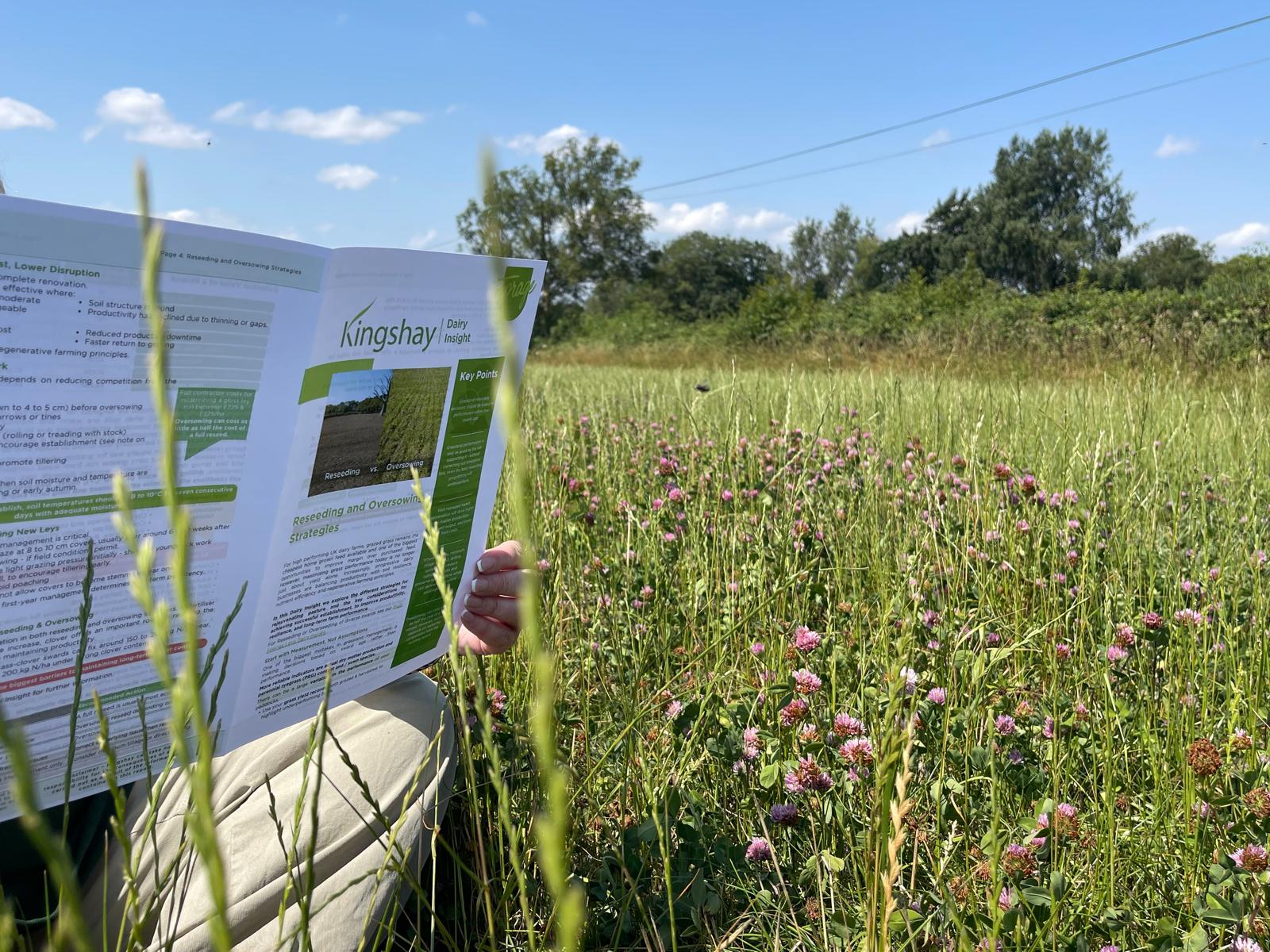
Stay one step ahead with Kingshay’s trusted Insight publications. Practical, expert-led briefings designed for modern dairy farming businesses. Produced since 1991, our concise, easy-to-digest updates deliver the knowledge you need to improve performance, strengthen your business, and support your whole farm team.
Our Insight publications cover all key areas of dairy farming, bringing together technical, research and business information, into clear, actionable advice you can use on farm. Alongside this, our monthly checklist provides timely reminders of essential tasks and highlights important policy changes, helping you stay organised and in control throughout the year.
Written and regularly updated by our specialists, each publication delivers clear, relevant advice in a simple format – ideal for farmers, family members, staff, vets and consultants alike.
A selection of our publications are available to purchase individually here online. To unlock the full library of publications and stay consistently informed, join our community, become a Kingshay member today.

Sign in to download the publications included with your membership, or to purchase a copy.
-

Dairy Insight
Selective Dry Cow Therapy
The typical method for preventing new infections and treatment of intra-mammary infections during the dry period has historically been the blanket use of Dry Cow Therapy. With the rise of antimicrobial resistance in human as well as veterinary medicine, this prophylactic use of antibiotics (ABs) is now considered unnecessary, as many cows in the herd will be treated with ABs when they don't need it.
-
Dairy Insight
Monitoring Mastitis Management
Every clinical case of mastitis costs around £290. Currently the top 25% of farmers achieve 22 mastitis cases per 100 cows, while the group average is 41 cases per 100 cows (Kingshay Dairy Costings Focus 2017). These 19 fewer cases achieved savings of £5,510 through reduced treatment costs and increased milk sales. Keeping good mastitis […]
-
Dairy Insight
Youngstock Housing
Replacement heifers account for almost 10% of on-farm costs, yet the Kingshay 2012 Youngstock Survey found that 15.5% of first-calving heifers fail to calve into the milking herd for a second time. It is vital to manage youngstock in a way that will produce excellent growth rates and set up an animal for a long, […]
-
Dairy Insight
How to get the most from your vet
To maximise the health and performance of any dairy herd, it's essential that all dairy farms work hand-in-hand with their vet to proactively prevent disease. No modern-day farmer or vet can afford to view veterinary intervention as something to consider only when an animal is sick. Instead, taking a team approach to set farm specific […]
-
Dairy Insight
Cross Breeding – Choosing a bull
Once the decision has been made to cross breed, it's important to establish a clear, well planned breeding programme and choose bulls based on the qualities you want, as well as the breed. Genetic gain should be the focus of any strategy. Issued November 2017 About Kingshay Farming Notes Since 1991 Kingshay has been publishing […]
-
Dairy Insight
Cross Breeding – why cross breed
Cross breeding could form part of the solution for those farmers looking to make improvements in herd health, fertility and robustness. Issued Oct 2017. About Kingshay Farming Notes Since 1991 Kingshay has been publishing Farming Notes on issues critical to the success of a modern dairy farm business. These briefings provide dairy farmers, large […]
-
Dairy Insight
Body Condition Scoring
Body Condition Scoring (BCS) is a simple and effective farm management tool. It is a measure of body fat/energy reserves, that can be used to aid decisions or troubleshoot issues as they arise. The fine tuning of nutrition throughout the lactation and dry period improves the overall nutritional status of the herd, leading to improved […]
-
Dairy Insight
Ketosis
Ketosis is one of the most significant 'hidden' diseases affecting the UK dairy herd. Around 30% of cows are estimated to develop the metabolic disease during the transition period at a cost of about £200 a case. This Farming Note focuses on causes, diagnosis, testing and treatment. Issued August 2017 About Kingshay Farming Notes […]
-
Dairy Insight
Cow Tracks
Tracks play a key role in enabling early turnout and allowing effective use of grazing right through the season. This Farming Note assesses the key practical aspects of a good track infrastructure and includes feedback on track demonstrations at Bridge Farm and Gelli Aur in South Wales. Issued February 2017. About Kingshay Farming Notes Since […]
-
Dairy Insight
Lepto
Leptospirosis (lepto) is a bacterial disease of cows which causes infertility, abortion storms, higher cell counts and lower milk yields. Control of lepto is particularly crucial as it is zoonotic, so can be transmitted to humans.
-
Dairy Insight
Reducing Mastitis Pressure in Buildings
Environmental mastitis pathogens are naturally present in the housed environment, but problems occur when the pathogen pressure becomes too high. This Farming Note covers: What encourages environmental mastitis? Reducing humidity Loose housing risk Which bedding is the most hygienic? Bedding conditioners – prices Issued December 2015. About Kingshay Farming Notes Since 1991 Kingshay has been […]
-
Dairy Insight
Selective Antibiotic Use
There is increasing pressure on producers to use veterinary medicines more sparingly, in particular, antibiotics. Many assurance schemes are striving to prove agriculture is doing its bit to prevent antimicrobial resistance. This Farming Note covers measures that can be taken to use antibiotics more selectively. This Farming Note covers: How antibiotic resistance can develop on […]

Find out how Kingshay can help you and your farming business.
Kingshay have been supporting farmers and providing clarity to farming businesses and the wider industry since 1991.