

Publications
Our publications provide up-to-date knowledge and practical solutions to everyday challenges to meet the needs of the modern dairy farmer.
Kingshay Dairy Insight Publications
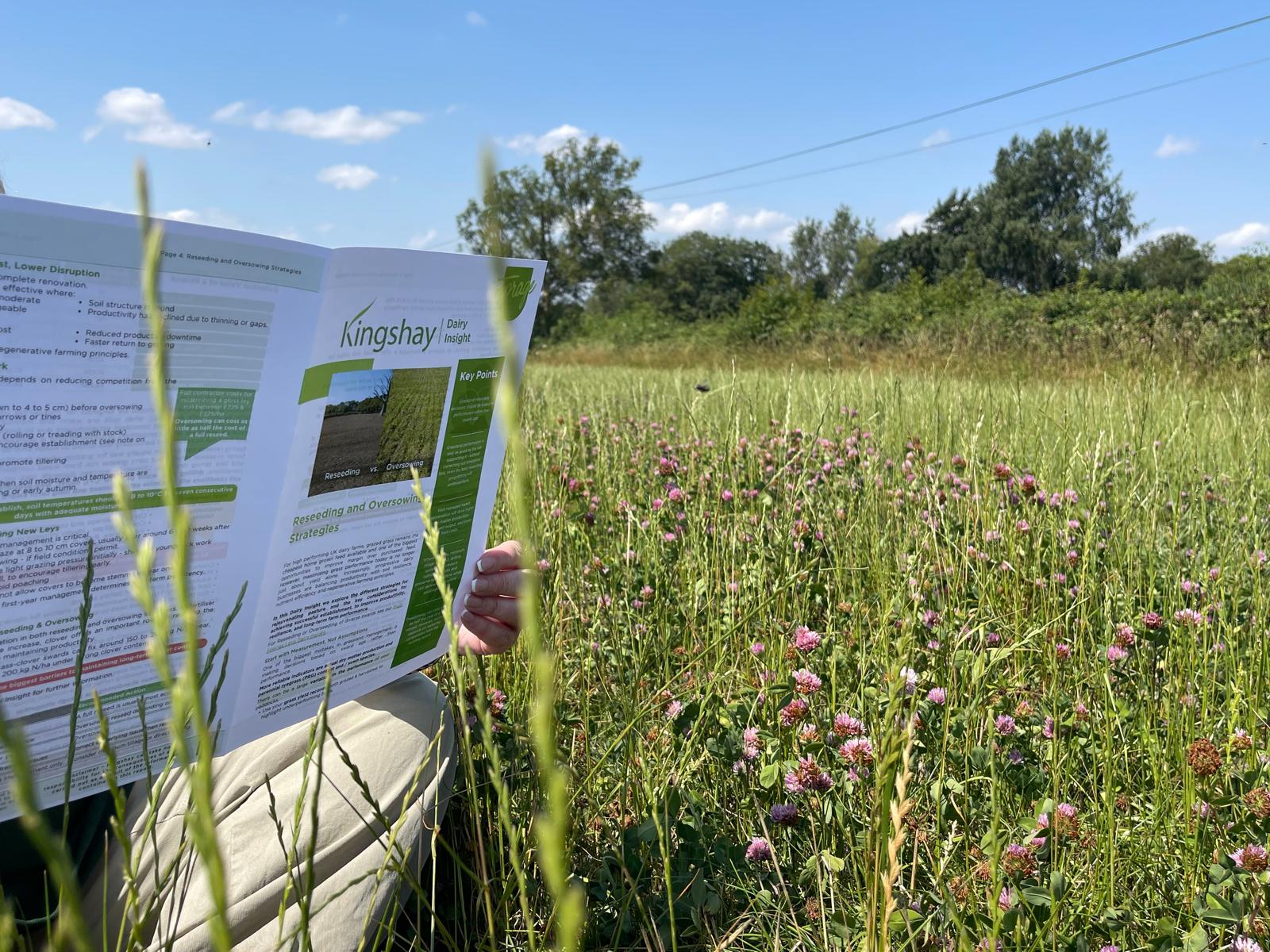
Stay one step ahead with Kingshay’s trusted Insight publications. Practical, expert-led briefings designed for modern dairy farming businesses. Produced since 1991, our concise, easy-to-digest updates deliver the knowledge you need to improve performance, strengthen your business, and support your whole farm team.
Our Insight publications cover all key areas of dairy farming, bringing together technical, research and business information, into clear, actionable advice you can use on farm. Alongside this, our monthly checklist provides timely reminders of essential tasks and highlights important policy changes, helping you stay organised and in control throughout the year.
Written and regularly updated by our specialists, each publication delivers clear, relevant advice in a simple format – ideal for farmers, family members, staff, vets and consultants alike.
A selection of our publications are available to purchase individually here online. To unlock the full library of publications and stay consistently informed, join our community, become a Kingshay member today.

Sign in to download the publications included with your membership, or to purchase a copy.
-

Dairy Insight
Dung Beetles Dairy Insight
Dung beetles could be saving the UK cattle industry around £367 million per year and protecting them on your farm could save you another £4.36 per cow. This insight explores why dung beetles are in decline, how to survey for them and how to increase dung beetles on your grassland.
-
Dairy Insight
Managing for Farmland Birds Dairy Insight
According to data released by the UK government in April 2023, 48% of bird species have shown a decline in the five years between 2015 and 2020. Currently the 2021 index is running at 12% below its 1970 value. Farmers can play a crucial role in helping to improve species loss by implementing various practices […]
-
Dairy Insight
Analysing slurry and manure
Slurries and farm yard manures represent a hugely valuable and often under utilised resource on many dairy farms. Understanding their nutrient values could help reduce reliance on bought in fertiliser and save money.
-
Dairy Insight
Slurry Acidification
The use of acidification or pH reduction systems to lower the pH of slurry is increasingly being talked about by Government as a means of hitting ammonia and methane reduction targets. In fact, acidification equipment was listed as one of the big budget items eligible for the Improving Farm Productivity Grant released at the start of the year. Slurry acidification boosts the available nutrient value of slurry, whilst also potentially removing the need to cover slurry stores. However, this high-cost system comes with technical challenges, health and safety risks and needs careful consideration.
-
Dairy Insight
Carbon Markets
Some of the UK's most precious and valued habitats such as woodland, peatland, grassland and saltmarshes remove vast amounts of carbon dioxide from the atmosphere and store it as carbon, having a positive impact on climate change. However, it's not just near-natural habitats that have this ability: improved grassland, arable soils, plantation forestry, hedgerows, agro-forestry, and other managed landscapes hold immense potential to continually remove and store carbon. This business insight explores how these carbon sinks can potentially be a source of income.
-
Dairy Insight
Reducing Plastic Waste on Farm
An average of 13,000 tons of plastic is produced by UK farms each year. Reducing waste on your farm can reduce costs, reduce time as well as being better for the environment. This DAIRY insight covers; ways to reduce plastic waste, the laws surrounding waste, how to reuse and recycle plastic, farm plastic schemes and plastic alternatives.
-
Dairy Insight
Cutting Soya Bean & Palm Kernel Out of the Diet
Environmental concerns surrounding the production of soya bean and palm means their use in dairy cow diets is becoming increasingly unacceptable. Some supermarkets have already banned their milk suppliers from feeding them; a trend that looks set to continue. Growing pressure to reduce dairy farming's carbon footprint also makes these products even less attractive. As such, as an industry, we must look at alternative feed options. This DAIRY insight explores how soya and palm are used in the industry and what the available alternatives are.
-
Dairy Insight
Regenerative Farming
In recent years, the term Regenerative Farming has become more widespread in its use. This interest has not only been within the industry, but regenerative agriculture has also received attention from consumers, mainstream media and even politicians, particularly around the possibilities for positive impact on climate change. As such, it should not be ignored. In this DAIRY insight we look at what regenerative farming is, and what practices can be adopted on-farm for a sustainable profitable future.
-
Dairy Insight
Reducing Nitrogen Losses; On-Farm Solutions
This is the second in the 2-part series of publications covering Nitrogen. In this publication we look at the on-farm solutions to reduce nitrogen losses. The first publication provides an introduction to the Nitrogen Cycle and where nitrogen is lost in the system. The agricultural industry will shortly be operating under a new regulatory framework focusing on producing clean air, water, lower carbon emissions, as well as supplying food to feed the nation. Nitrogen helps greatly to feed the nation, but its effect on air and water quality can be negative and difficult to manage. Applying too much or the wrong type of fertiliser can lead to an increase of Nitrogen losses through Ammonia (NH3) volatilization, nitrate (NO3?) leaching and nitrous oxide (N2O) emissions from soil.
-
Dairy Insight
Introduction to Nitrogen the problems
This is the first part of a 2-part series of publications covering Nitrogen. In this publication we look at the Nitrogen Cycle and where nitrogen is lost in the system. The second publication examines the on-farm solutions to nitrogen losses. The agricultural industry will shortly be operating under a new regulatory framework focusing on producing clean air, water, lower carbon emissions, as well as supplying food to feed the nation. Nitrogen helps greatly to feed the nation, but its effect on air and water quality can be negative and difficult to manage. Applying too much or the wrong type of fertiliser can lead to an increase of Nitrogen losses through Ammonia (NH3) volatilization, nitrate (NO3?) leaching and nitrous oxide (N2O) emissions from soil.
-
Dairy Insight
Agroforestry
Agroforestry is increasingly being talked about as a means of helping agriculture meet net zero targets, with DEFRA planning to support farmers with the integration of trees as part of Environmental Land Management and Wales proposing 10% tree cover as part of The Sustainable Farming Scheme. Although the details are not yet known, getting ahead of the curve and working out how trees can fit into a dairy farming system could bring big benefits, extending to animal health & welfare and farm productivity. This Dairy Insight explores the different types of agroforestry that are available and takes a look at how you can incorporate trees into your dairy system.
-
Dairy Insight
Natural Capital
is the buzzword of the moment – but what does it really mean and why is it essential to farmers? This insight publication looks at why natural capital is important in the dairy industry and summarises some dairy farming practices that support natural capital. Issued November 2018. About Kingshay insight publications insight publications […]

Find out how Kingshay can help you and your farming business.
Kingshay have been supporting farmers and providing clarity to farming businesses and the wider industry since 1991.