
Publications
Our publications provide up-to-date knowledge and practical solutions to everyday challenges to meet the needs of the modern dairy farmer.
Kingshay Dairy Insight Publications
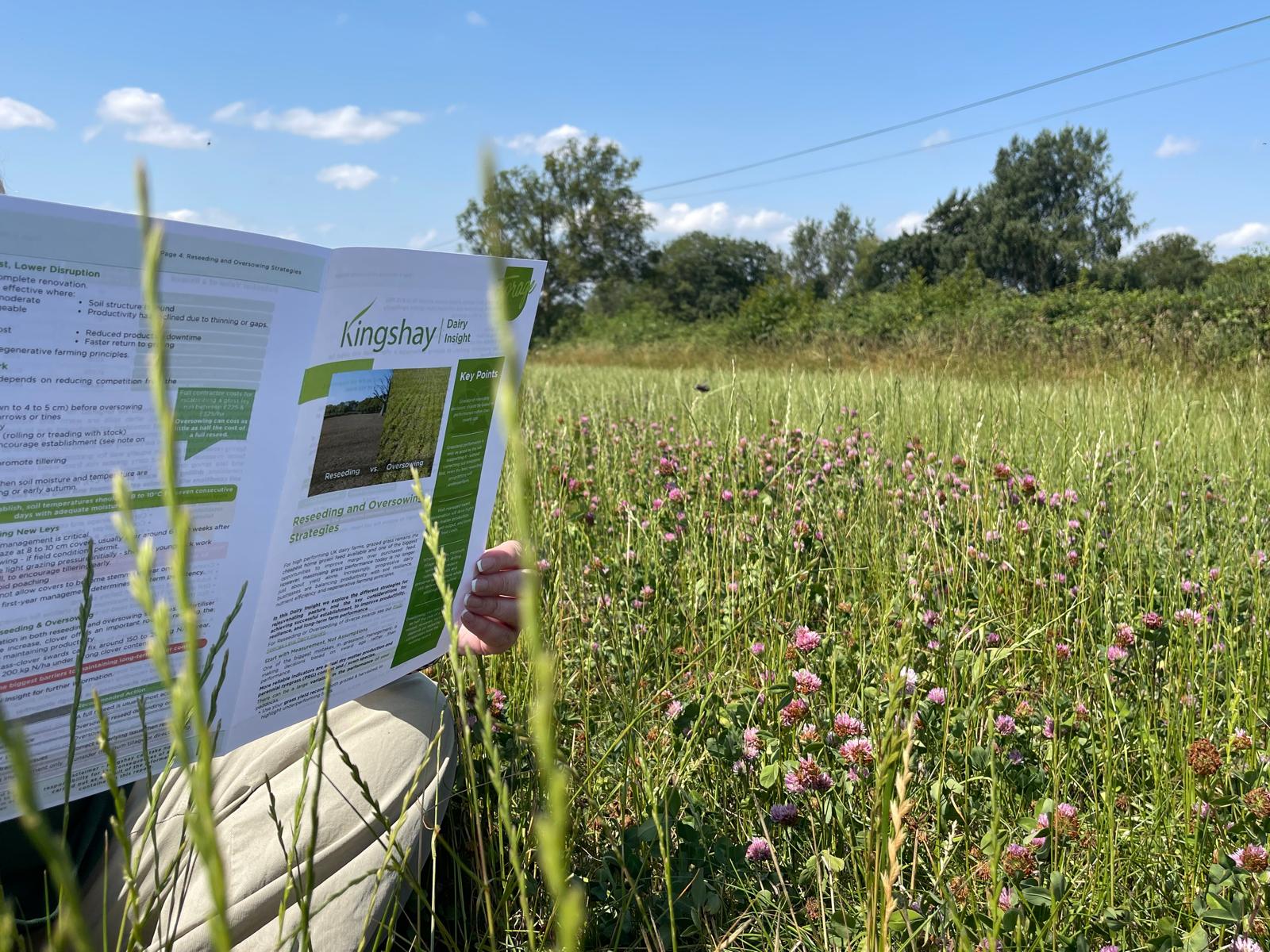
Stay one step ahead with Kingshay’s trusted Insight publications. Practical, expert-led briefings designed for modern dairy farming businesses. Produced since 1991, our concise, easy-to-digest updates deliver the knowledge you need to improve performance, strengthen your business, and support your whole farm team.
Our Insight publications cover all key areas of dairy farming, bringing together technical, research and business information, into clear, actionable advice you can use on farm. Alongside this, our monthly checklist provides timely reminders of essential tasks and highlights important policy changes, helping you stay organised and in control throughout the year.
Written and regularly updated by our specialists, each publication delivers clear, relevant advice in a simple format – ideal for farmers, family members, staff, vets and consultants alike.
A selection of our publications are available to purchase individually here online. To unlock the full library of publications and stay consistently informed, join our community, become a Kingshay member today.

Sign in to download the publications included with your membership, or to purchase a copy.
-

Dairy Insight
Water Supply For Housed Cows
Water not only accounts for approximately 87% of milk but will account for between 60 and 70% of a cows' body composition. With this in mind we can understand why water is such an important part of the cow's diet. This DAIRY insight explores why a plentiful, high quality and accessible water supply is fundamental to optimising milk production and animal health.
-
Dairy Insight
Augmented Reality
Imagine looking at a cow and seeing a box appear over her head with all the information you need about her stage of lactation, fertility and health status. An augmented reality (AR) feasibility study is investigating whether such a tool could become a reality. The smARtview project creates a unique collaboration between vets and computer gaming specialists who are working together in a UK first to see if it's possible to develop an AR management tool for dairy farmers.
-
Dairy Insight
Cubicle Modifications
Having spent time assessing how well the cows use your cubicles (see Cubicles – what do your cows want?) it is vital to adjust them to suit your cows. This DAIRY insight explores how making small adjustments, which cost very little will make a huge difference to how cows use your cubicles, resulting in cleaner and healthier cows. Low -cost solutions to high-cost problems!
-
Dairy Insight
Cubicles – what do cows want
Happy cows are productive cows! The key is to ensure every aspect of management and cow environment is set up to make the most of the cow's natural behaviour. Closely monitoring your cows and their behaviour will 'tell' you whether your facilities could be modified to further meet their needs. This DAIRY insight explores what you need to look out for in order to establish what works for your cows and where changes can be made to your cubicle sheds to improve cow comfort, welfare, production and ultimately profitability.
-
Dairy Insight
Benchmarking Soil Organic Carbon
Soil Organic Carbon (SOC) has become a bit of a buzz word in the industry. This may have prompted you to investigate the SOC within your own soils, or it may be something that you are considering. After all, if you put aside the current interest in carbon from an environmental angle, farmers ought to be focussed on maintaining or increasing the carbon in their soils, from the standpoint that soils with a high level of carbon are healthy soils – all the more reason to understand the SOC levels in your soils. In this DAIRY insight we look at interpreting your SOC analysis and using the results to benchmark your soil, to help you make informed decisions on how to maintain or improve SOC going forward.
-
Dairy Insight
Water Quality & Udder Health
Private water sources are a great way to lower water costs on dairy farms, but failure to routinely monitor and address water quality issues can lead to problems with udder health. As such, it's vital that any non-mains water sources used in and around the parlour are tested for bacteria levels every 6-12 months. This DAIRY insight looks at the risks surrounding private water supplies, how to monitor contamination and how to address any problems that arise.
-
Dairy Insight
Measuring Soil Organic Carbon
In order to achieve Net Zero by 2040, British Farming needs to capture more carbon (C). Hedgerows, woodland and soils have all been identified as key areas for C-sequestration (permanent removal of C from the atmosphere). Grassland has a major role to play, because unlike woodland, where the majority of C is stored in the vegetation, as much as 90% of the C in pasture is located in the soil. In this DAIRY insight we look at why you might want to measure your soil organic carbon (SOC), what analysis is available, taking an accurate soil sample and what else you might want to measure.
-
Dairy Insight
Computerised Calf Feeders
Computerised calf feeders are becoming increasingly popular to help labour efficiencies. Managed well, they can improve milk feeding consistency, drive weight gains and optimise calf performance. However, top notch hygiene and careful use of data is needed to realise their true potential. This DAIRY insight explores the key considerations when choosing a calf machine.
-
Dairy Insight
Reducing Plastic Waste on Farm
An average of 13,000 tons of plastic is produced by UK farms each year. Reducing waste on your farm can reduce costs, reduce time as well as being better for the environment. This DAIRY insight covers; ways to reduce plastic waste, the laws surrounding waste, how to reuse and recycle plastic, farm plastic schemes and plastic alternatives.
-
Dairy Insight
Fine Tuning Heifer Rearing
Heifer calves are the future of most dairy herds, and you don't get a second chance at getting it right. Therefore, time taken for attention to detail pays dividends, not only for the calf but for the lifetime of the animal – time and money that could be recouped many times over. This RESEARCH insight explores two recent studies, and asks if their findings can positively impact your heifer rearing management.
-
Report
Soil – Completing the Carbon Jigsaw
This Soil Carbon Report, 'Soil – completing the carbon jigsaw' combines the key findings from the Kingshay Soil Organic Carbon Project, alongside other research and knowledge. The aim of the project was to better understand the current soil organic carbon (SOC) levels of grassland soils and gain a better knowledge of carbon sequestration and how management practices on farm may influence carbon levels. It is intended to be a practical guide for farmers who want to improve or maintain soil organic carbon in their grassland soils. This report will help farmers to understand how they can play their part in climate change mitigation whilst improving the health of their soil, having a positive impact on their profitability.
-
Dairy Insight
E coli Mastitis
E. coli is one of the primary causes of clinical mastitis in the UK, presenting in various guises from mild cases to severe toxic mastitis that few cows will survive. With that in mind, the emphasis should be on preventing infection by ensuring cows are kept in a clean, dry environment.
Find out how Kingshay can help you and your farming business.
Kingshay have been supporting farmers and providing clarity to farming businesses and the wider industry since 1991.