

Publications
Our publications provide up-to-date knowledge and practical solutions to everyday challenges to meet the needs of the modern dairy farmer.
Kingshay Dairy Insight Publications
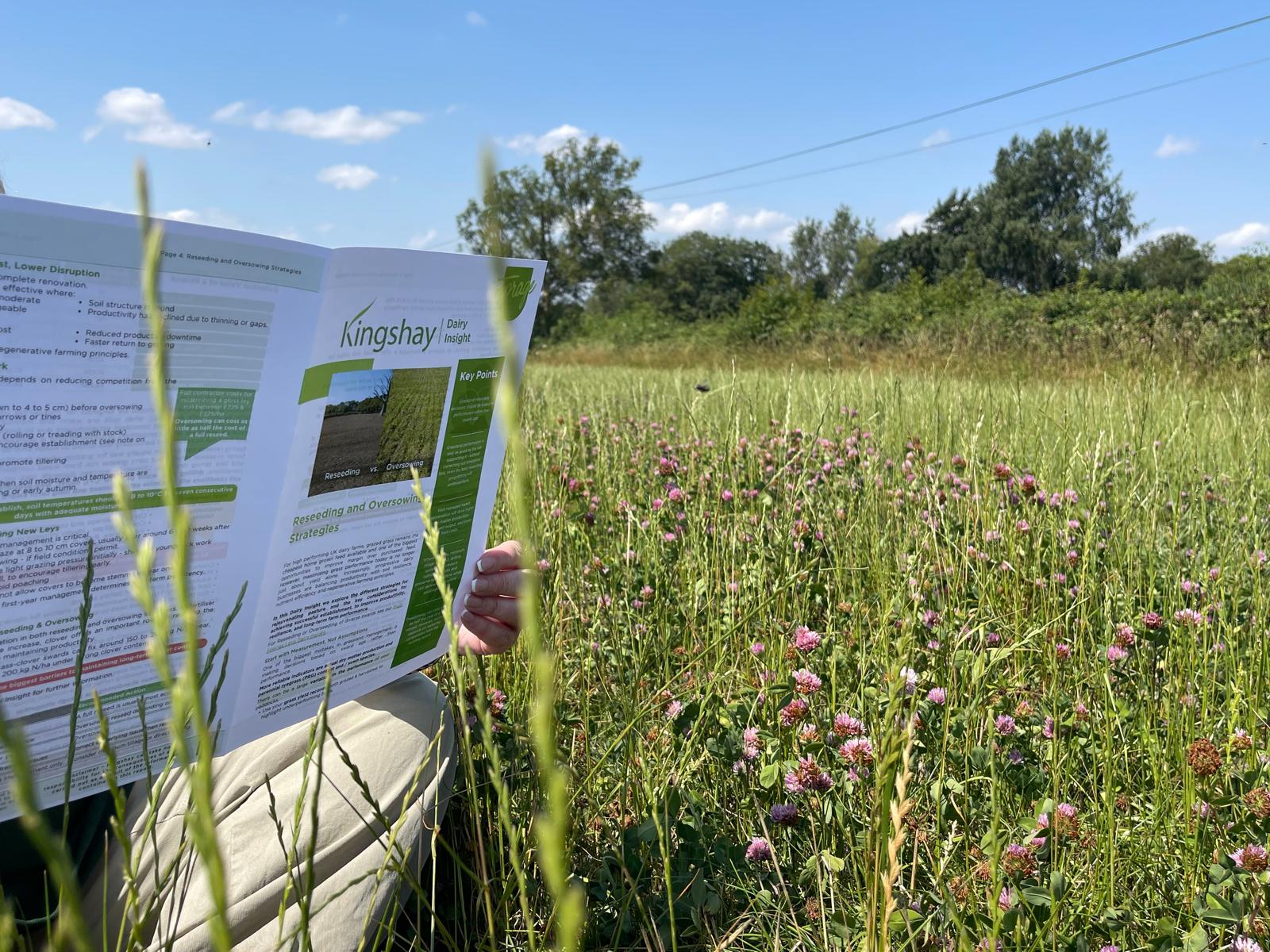
Stay one step ahead with Kingshay’s trusted Insight publications. Practical, expert-led briefings designed for modern dairy farming businesses. Produced since 1991, our concise, easy-to-digest updates deliver the knowledge you need to improve performance, strengthen your business, and support your whole farm team.
Our Insight publications cover all key areas of dairy farming, bringing together technical, research and business information, into clear, actionable advice you can use on farm. Alongside this, our monthly checklist provides timely reminders of essential tasks and highlights important policy changes, helping you stay organised and in control throughout the year.
Written and regularly updated by our specialists, each publication delivers clear, relevant advice in a simple format – ideal for farmers, family members, staff, vets and consultants alike.
A selection of our publications are available to purchase individually here online. To unlock the full library of publications and stay consistently informed, join our community, become a Kingshay member today.

Sign in to download the publications included with your membership, or to purchase a copy.
-

Report
Forage Costings Report 2020
Last published in 2017, this NEW edition of the Forage Costings Report has been fully updated to provide a detailed insight into the costs of producing forage. Using this report enables the reader to compare the cost of a range of different forages and to see how they compare on the basis of their relative value, benchmarked against soya and wheat.
-
Dairy Insight
Holding Effective Video Meetings
As the world accustoms to living with the threat of Covid-19, it becomes apparent we will all be adjusting what we do for some time to come. Lockdown may be easing, but changes to everyday life and within everyone's working environments will have been modified, in some instances forever. The use of technology for video meetings or conference calls in the dairy industry until now, has been rare. This DAIRY insight: explores the opportunities for video meetings and how to get the most from them
-
Dairy Insight
Setting up a Milk Vending Machine
Adding value to milk and selling direct to consumers through a milk vending machine is increasing in popularity, with the trend for buying local gaining impetus during the coronavirus pandemic. Selling direct creates the opportunity for added income, whilst helping promote the dairy industry. However, it's not something to venture into lightly. Location, marketing and legislation are all areas worth considering before investing. This DAIRY insight explores these topics to help you decide whether this may be an opportunity for your business.
-
Dairy Insight
Automatic Heat Detection Research Insight
Poor fertility is one of the largest economic problems on dairy farms. Data from Kingshay Dairy Manager puts the losses as a result of poor fertility at £197 per cow, or the equivalent of 2.31p/litre which for an average 150-cow herd equates to £20,250/year. This RESEARCH insight looks at the latest developments in automatic heat aids and what can impact accurate heat detection.
-
Dairy Insight
Introduction to Nitrogen the problems
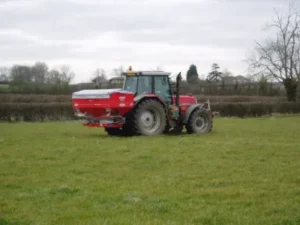
This is the first part of a 2-part series of publications covering Nitrogen. In this publication we look at the Nitrogen Cycle and where nitrogen is lost in the system. The second publication examines the on-farm solutions to nitrogen losses. The agricultural industry will shortly be operating under a new regulatory framework focusing on producing clean air, water, lower carbon emissions, as well as supplying food to feed the nation. Nitrogen helps greatly to feed the nation, but its effect on air and water quality can be negative and difficult to manage. Applying too much or the wrong type of fertiliser can lead to an increase of Nitrogen losses through Ammonia (NH3) volatilization, nitrate (NO3?) leaching and nitrous oxide (N2O) emissions from soil.
-
Dairy Insight
Colostrum Hygiene & Storage
Heifer calves are the future of your dairy herd, you don't get a second chance at getting it right. Therefore, time taken for attention to detail pays dividends not only for the calf but for the lifetime of the animal – time and money that could be recouped many times over. This dairy insight summarises best practice in colostrum hygiene and storage to get your calves off to the best possible start.
-
Dairy Insight
Agroforestry
Agroforestry is increasingly being talked about as a means of helping agriculture meet net zero targets, with DEFRA planning to support farmers with the integration of trees as part of Environmental Land Management and Wales proposing 10% tree cover as part of The Sustainable Farming Scheme. Although the details are not yet known, getting ahead of the curve and working out how trees can fit into a dairy farming system could bring big benefits, extending to animal health & welfare and farm productivity. This Dairy Insight explores the different types of agroforestry that are available and takes a look at how you can incorporate trees into your dairy system.
-
Dairy Insight
Getting Ready for the Silage Season
We all know that quality grass silage is the linchpin to cost effective, profitable production. Kingshay figures show that it costs just 6.1ppl to make average quality grass silage, versus 8.1ppl for a typical 18% parlour concentrate (Forage Costings Report 2017). With that in mind, it makes sense to maximise the potential of the silage you make in order to displace expensive bought-in concentrates. This DAIRY insight highlights the considerations for setting yourself up for a successful silage season.
-
Dairy Insight
The Carbon Neutral Dairy Farm of 2040
This is the fifth in a series of DAIRY insight publications covering 'Net Zero Emissions', where we aim to outline current and future actions that may help the UK dairy industry become net zero emissions by 2040.
-
Dairy Insight
Thermoduric Bacteria
A growing number of milk processors are testing milk for thermoduric bacteria and penalising for counts above >500 cfu/ml. With high counts associated with milk quality and shelf-life issues, it is likely that thermodurics could join somatic cell counts (SCC) and bactoscans on the list of routinely monitored parameters in the not too distant future. Understanding your farm's levels and adopting good cow and milking plant cleanliness is a must to keep counts under control. This DAIRY insight looks at where thermoduric bacteria are found and how to prevent them getting into your milk.
-
Dairy Insight
Lameness Behaviour in Dairy Cows
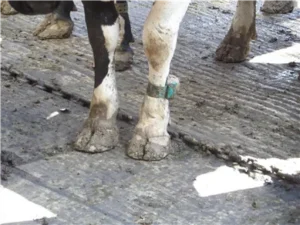
Lameness is a costly disease in dairy herds with each case estimated to cost £196 – for treatment costs, labour, loss of milk production, loss of fertility and culling. It is thought average lameness levels have increased slightly to around 40 cases for every 100 cows. However, in the top 25% of dairy herds lameness levels are down at 21 cases per 100 cows saving £3,724 for every 100 cows (Dairy Costings Focus Report 2019). This RESEARCH insight explores some of the latest lameness studies and looks at how the findings can influence on-farm performance.
-
Dairy Insight
Maximising the Value of Every Calf
An increasing number of processors are introducing plans to encourage farmers to phase out calf euthanasia of healthy, young bull calves. Such a move is undoubtedly the right thing to do from both a moral and animal welfare perspective. However, it means some farmers will have to find ways to rear higher stock numbers, whilst also identifying an outlet for those calves. Arla's recent announcement that no calf should be euthanised under eight weeks old will impact on a large number of UK farmers. The key is to plan ahead to maximise the value of every calf, this DAIRY insight publication explores the key considerations.

Find out how Kingshay can help you and your farming business.
Kingshay have been supporting farmers and providing clarity to farming businesses and the wider industry since 1991.