
Publications
Our publications provide up-to-date knowledge and practical solutions to everyday challenges to meet the needs of the modern dairy farmer.
Kingshay Dairy Insight Publications
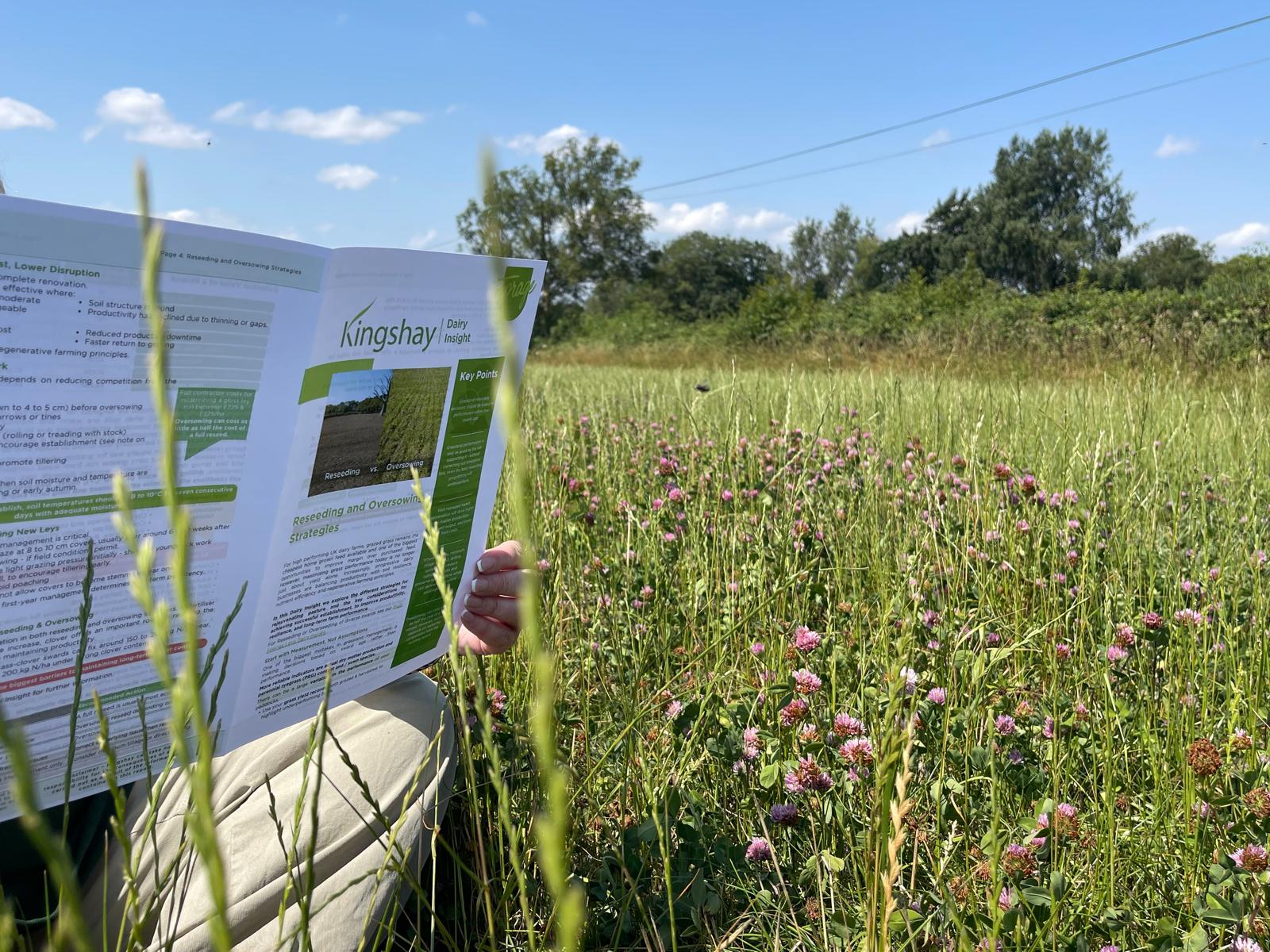
Stay one step ahead with Kingshay’s trusted Insight publications. Practical, expert-led briefings designed for modern dairy farming businesses. Produced since 1991, our concise, easy-to-digest updates deliver the knowledge you need to improve performance, strengthen your business, and support your whole farm team.
Our Insight publications cover all key areas of dairy farming, bringing together technical, research and business information, into clear, actionable advice you can use on farm. Alongside this, our monthly checklist provides timely reminders of essential tasks and highlights important policy changes, helping you stay organised and in control throughout the year.
Written and regularly updated by our specialists, each publication delivers clear, relevant advice in a simple format – ideal for farmers, family members, staff, vets and consultants alike.
A selection of our publications are available to purchase individually here online. To unlock the full library of publications and stay consistently informed, join our community, become a Kingshay member today.

Sign in to download the publications included with your membership, or to purchase a copy.
-

Dairy Insight
Net Zero Emissions – Nitrogen Oxides
This is the fourth in a series of dairy insight publications covering 'Net Zero Emissions', where we will attempt to identify the sources of each GHG, how it may be reduced and aim to outline current and future actions that may help the UK dairy industry become net zero emissions by 2040. On dairy farms nitrogen oxides are produced almost entirely by the way we store and spread manures and fertilisers and the ability of our soils to manage water flow. This DAIRY insight explores practical ways to mitigate these gases.
-
Dairy Insight
Net Zero Emissions Methane
This is the third in the series of dairy insight publications covering 'Net Zero Emissions' where we will attempt to identify the sources of each GHG, how it may be reduced and aim to outline current and future actions that may help the UK dairy industry become net zero emissions by 2040. Dairy cows produce approximately 21 grams of Methane (CH4) per kilogram of dry matter consumed: 500 g/day for cow consuming 24 Kg/DM/day, or 4,828 kgCO2e/yr. Reducing methane levels in the atmosphere is seen by many as a powerful lever to buy time until a decarbonised economy is created. This dairy insight explores practical ways to mitigate methane production on dairy farms.
-
Dairy Insight
Net Zero Emissions Carbon Dioxide
This is the second in the series of dairy insight publications covering 'Net Zero Emissions'. We will attempt to identify the sources of each GHG, how it may be reduced and aim to outline current and future actions that may help the UK dairy industry become net zero emissions by 2040.
-
Dairy Insight
Net Zero Emissions
This is the first in a series of dairy insight publications covering 'Net Zero Emissions'. We will attempt to identify the sources of each GHG, how it may be reduced and aim to outline current and future actions that may help the UK dairy industry become net zero emissions by 2040.
-
Dairy Insight
Linking Succession with Business Planning
Business planning and succession planning are often seen as two separate topics, but fusing them together is a must if farming families want to safeguard their business's future. After all, if the long-term business objectives of the current farming generation do not fit with that of the successor this could result in long-time business challenges. At the same time, if different people have varying expectations of how the farm will be divided, this could lead to a will being contested and potentially the end of the business. This BUSINESS insight explores the succession process with this in mind.
-
Dairy Insight
Precision Cut vs Forage Wagon
Many factors determine the quality of the silage that is ultimately fed to dairy cows. The Forage Cost Report bases yield and cost values on an average of well grown crops in a typical growing year and medium soils. But this is only part of the story. The quality of the grass, the speed and consolidation of the grass in the clamp, the chop length, clamp design, sealing, fermentation characteristics and the feed out all impact on the amount and value of the original crop that is ultimately converted to milk or meat (silo losses). In this DAIRY insight we compare the strengths and weaknesses of Forage Wagons versus Precision Chop systems in their silage making qualities.
-
Dairy Insight
Disbudding Calves Research Insight November 2019
In recent years many papers have been published around the procedure of disbudding, the use of NSAIDs, as well as health and safety aspects – including the inhalation of noxious gases during the process. This DAIRY insight explores a selection of this research.
-
Dairy Insight
Keeping Bacteria Out of MIlk
This issue of DAIRY insight looks at the importance of keeping bacteria out of milk, from a farm, processor and consumer point of view. It examines the main causes of high bactoscans and provides solutions to issues seen on farm.
-
Dairy Insight
NSAIDs for Pain Management in Cattle
Prompt recognition and treatment of disease are essential to reduce pain in cattle and promote cow welfare. Non-Steroidal Anti-Inflammatory drugs (NSAIDs) are an important component in helping manage pain, inflammation and disease. This DAIRY insight publication will look at how NSAIDs can form part of a treatment regime in cattle.
-
Dairy Insight
Successful Transition to the Winter Diet
Making sure cows are moved onto the correct winter ration will not only ensure milk production and cow health is maintained, but that the farm's grazing covers are closed correctly to allow adequate grass the following spring. This insight publication will highlight the key considerations for transitioning cows onto a winter diet.
-
Dairy Insight
Successful Interviewing Technique
Employing the wrong person can be costly to a business, not only financially but to the team as a whole. Therefore, the interviewing process is incredibly important, but how can you make sure you get the best candidate for your farm? This dairy insight publication explores best practice around the interview process. Issued August 2019. […]
-
Dairy Insight
Compact Feeding
Compact feeding is a popular concept in Denmark and one that is growing in popularity in the UK. It was developed by Danish professor, Niels Bastian Kristensen. The principal of compact feeding is soaking and mixing concentrates, then adding forage and mixing again – creating a consistency similar to porridge. This DAIRY insight publication looks at the process of compact feeding and examines the advantages and possible pitfalls


Find out how Kingshay can help you and your farming business.
Kingshay have been supporting farmers and providing clarity to farming businesses and the wider industry since 1991.